

Specialized Fisher & Paykel Appliance Repair in San Francisco
Mon–Sat: 8:00 AM – 7:00 PM
Strange-tasting ice from a Fisher & Paykel refrigerator usually comes from freezer odors, old ice or the water supply. Here is what to clear before booking.
Written for Fisher & Paykel owners
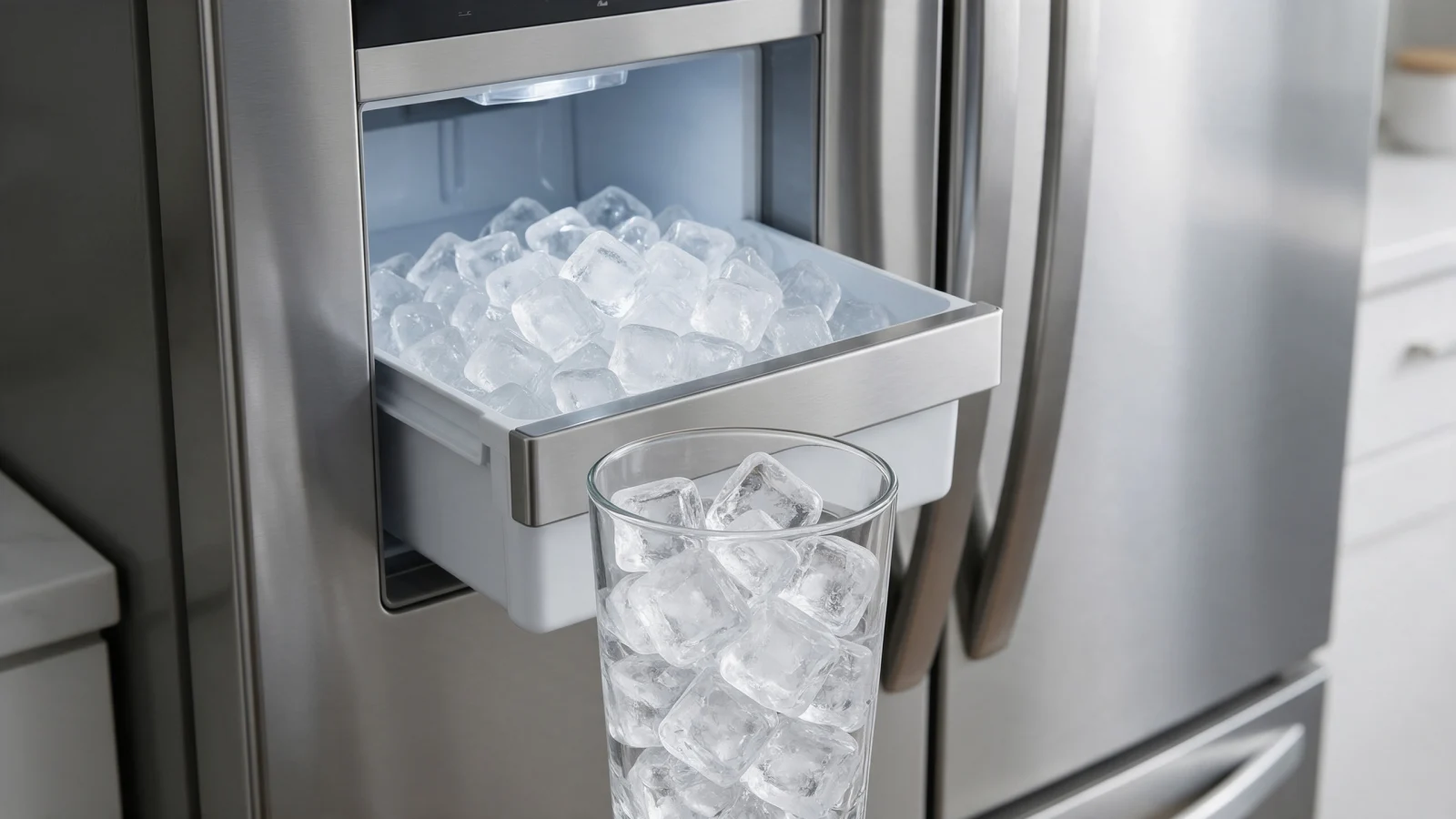
Ice that tastes or smells off from a Fisher & Paykel refrigerator is usually absorbing odors from the freezer, from old ice sitting in the bin, or from the water supply behind the ice maker. Throw out the current batch, clean the bin, and check what else shares the freezer before you suspect the machine.
Ice is a good sponge. Open food, cut onions and strong cheeses in the freezer release odors that settle into cubes within days. Ice that has been stored for a long time in the bin can also pick up a stale taste even if nothing else is wrong. The third source is the water that fills the tray: a new filter that was not flushed, a filter that has run its life, or a plumbing line that has stood idle. Taste a glass of water from the dispenser and compare it with a glass from the kitchen tap. If the water tastes off too, the supply is the problem. If the water is fine and only the ice tastes odd, look at the freezer and the bin.
Several Fisher & Paykel units make ice internally and deliver water at the door. The 36-inch RF201ACUSX1 is listed with a door water dispenser and an internal automatic ice maker. The RF170WLKJX6 spec sheet lists an internal automatic ice maker and an Ice Boost feature that increases production up to 30%. A feature that speeds production means more fresh ice, which is useful if you suspect old ice, because it helps replace the stale stock sooner.
On a built-in such as the RS36A80U1, listed with an internal ice maker and an external water dispenser, the ice and water paths are separate in use but share a supply, so a taste problem in one often shows in the other.
Leave the ice maker on while you do this so it starts to refill. If the new ice tastes clean, the old ice or the freezer odor was the cause.
If you keep the ice for entertaining, store it in a sealed bag in the freezer instead of leaving it in the open bin for weeks, and note whether the problem returns after you start doing this. A Fisher & Paykel ice maker that turns out clean ice for a week and then tastes odd again usually points back to storage or to something in the freezer rather than to a fault in the maker.
An ice maker that works in a freezer that runs warm can produce cloudy, soft or odd-tasting ice. Fisher & Paykel’s numbered refrigerator codes include several that relate to temperature sensing: code 5 is the freezer (FC) sensor reading above 45K ohms, code 6 is the same sensor below 660 ohms, and code 7 and code 8 cover the evaporator sensor in the same two ways. Code 2 is given as two defrost cycles aborted after 30 minutes. A defrost that cannot finish can leave frost and water where air should flow, and that can add odors and flavor.
| Code | Meaning as listed | Why it can touch ice quality |
|---|---|---|
| 2 | Previous two defrosts aborted after 30 minutes | Frost and meltwater can build in the freezer |
| 5 or 6 | Freezer sensor outside normal range | Freezer temperature may be read wrongly |
| 7 or 8 | Evaporator sensor outside normal range | Cooling and defrost control may be off |
The wine-cabinet pages on this site, such as F3 and related codes, are for a different product group, so use them only if your unit is a cabinet.
Cleaning and filter changes cannot show whether the freezer holds the temperature it should, whether the fill valve is leaking small amounts, or whether the defrost cycle is completing. A technician measures freezer temperature, checks the sensors against the coded ranges, looks at the defrost system and the fill path, and examines the ice maker module.
When you contact refrigerator repair, please give the model and serial from the rating label, any numbered code you saw, when the taste began, and whether water from the dispenser tastes the same. The refrigerator reference page lists related symptoms. Mention if you changed the filter recently, because timing helps us separate a filter flush issue from a machine fault.
The material we have gives no schedule. If the ice sits unused for a long time, empty and wash the bin and let fresh ice form.
Yes. A filter that was not flushed after fitting can leave a taste in water and ice. Flush it as the manual describes and discard the first ice.
Not usually. Odors from food, old ice and the water supply are far more common than an ice maker fault. A technician tests the machine if cleaning does not help.
Share a few details and we’ll confirm an appointment. Prefer to talk? Call us and we’ll help right away.