

Specialized Fisher & Paykel Appliance Repair in San Francisco
Mon–Sat: 8:00 AM – 7:00 PM
Frost or ice in a Fisher & Paykel fridge or freezer comes from air leaks or defrost faults. See what each pattern means, which codes matter and how to book.
Written for Fisher & Paykel owners
Frost or ice building up in a Fisher & Paykel refrigerator or freezer points to one of two broad causes: warm, moist air getting in, or a defrost system that is not clearing the evaporator. Where the frost forms tells you which, so note the location before you scrape anything away.
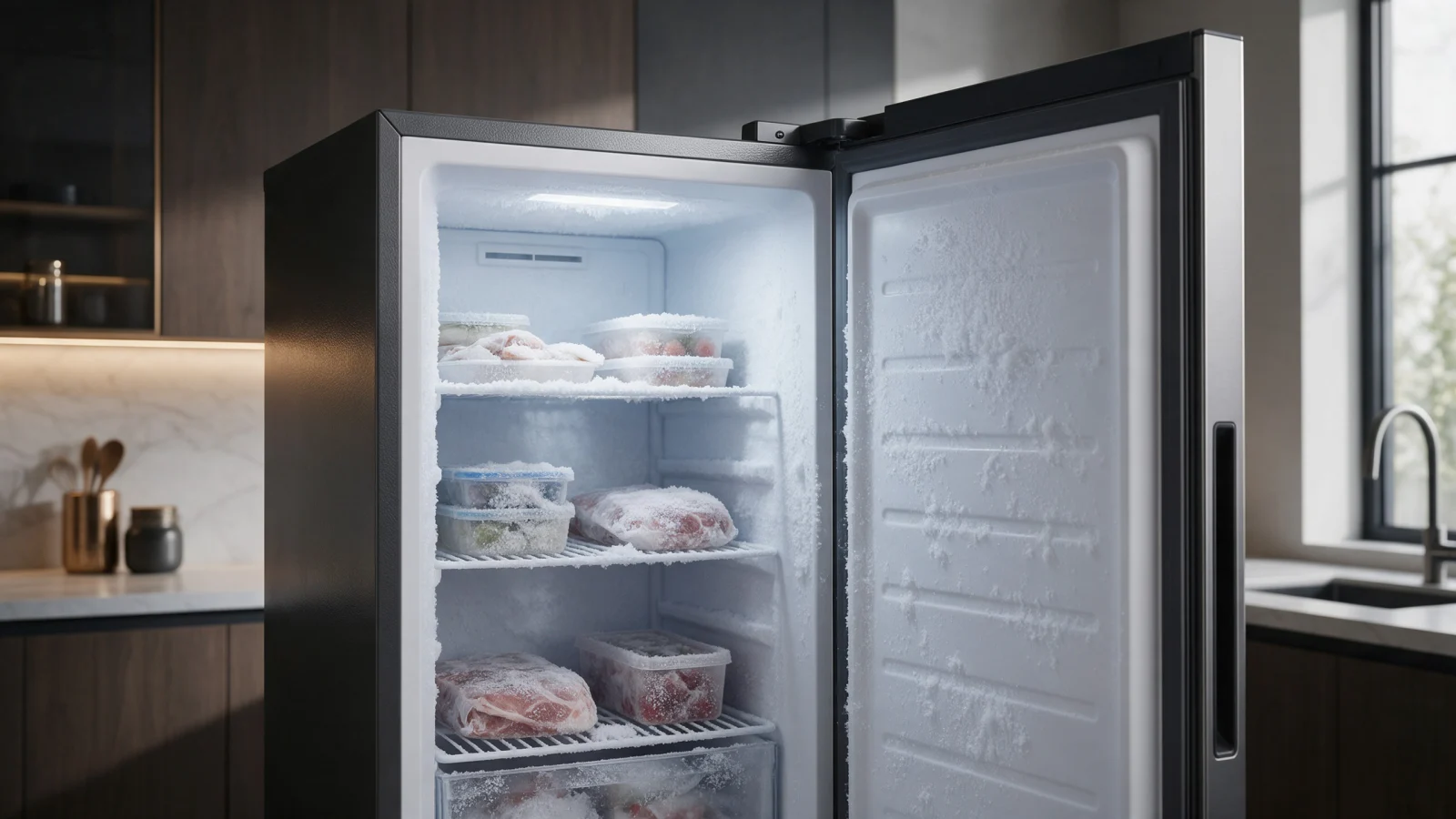
Frost concentrated along the door edge and on the first items inside suggests air is leaking past the seal or the door is being left ajar. A uniform layer on the back wall of the freezer, or a panel iced over where cold air normally enters, suggests the evaporator is not defrosting properly. Ice on the floor of the freezer or under the drawers is often meltwater that refroze, which can come from the defrost drain or from a leaking ice maker fill line. Ice around the ice maker itself, or cubes fused into a block in the bin, is a separate issue from general frost.
Take a photo of the frost before you clear it. A technician can read a lot from where it sat.
The numbered refrigerator list for Fisher & Paykel includes code 2, given as two previous defrosts aborted after 30 minutes. That is the plainest defrost clue in the list. A defrost that keeps aborting leaves frost on the evaporator, which blocks airflow and makes the compartments warm even though the compressor is running. Codes 7 and 8 cover the evaporator sensor, outside its normal range above 45K ohms and below 660 ohms respectively, and a sensor that misreads can start or stop a defrost at the wrong time.
Codes 11 and 12 describe the current measured for the ambient heater, the PC fan and the FC fan, lower or higher than expected. A fan that has slowed or stopped also leaves cold air where it should not sit and frost where it should not form. If your display or the machine’s diagnostic mode ever showed one of these numbers, write it down and tell us.
Everyday habits matter as much as faults in a Fisher & Paykel cabinet, and they are the cheapest thing to correct. A door held open while you load the shopping, hot dishes placed uncovered in the cabinet, and packages pressed against the back wall all raise humidity. A bottom-freezer model like the RF178WRNX1, listed with flat doors and recessed handles, has a long run of door gasket to seal against the cabinet. Check that the gasket sits flat, has no folds or gaps, and that the door closes against it all the way round. A dollar bill pressed in the door at several points is a common test: if it slides out easily at one spot, the seal there is loose.
The RS36A80U1 is listed with ActiveSmart adaptive cooling, and the RS3084SRHK1 with two variable temperature zones and Fridge, Pantry and Chill modes. On a model with several modes, a zone set to a very cold mode with the door opened often can frost faster. Check that the setting matches what you store.
Thawing and tidying are worth doing, and they give the technician a clean starting point on a Fisher & Paykel unit. These checks cannot tell you whether the defrost heater is warming, whether the defrost sensor or the control is reading correctly, or whether a fan has failed. A technician measures those. Our refrigerator reference lists nearby symptoms.
A technician checks the defrost heater and its circuit, the evaporator and freezer sensors against the coded resistance ranges, the fan motors, the seal and the drain path. They also look at the control to see which codes it has stored. When you book refrigerator repair, give us the model and serial from the rating label, where the frost forms, any code you saw, and whether it returned after you thawed it. Say how long you have noticed it and whether the compartments feel warmer than usual.
That pattern usually means air is getting in. Check that the gasket is flat and the door closes fully before looking for a defrost fault.
It means the previous two defrosts were aborted after 30 minutes. That strongly points to a defrost problem, but a technician has to test which part is responsible.
No. Use thawing, not tools. A sharp tool can damage the cooling parts hidden behind the liner.
Share a few details and we’ll confirm an appointment. Prefer to talk? Call us and we’ll help right away.