

Specialized Fisher & Paykel Appliance Repair in San Francisco
Mon–Sat: 8:00 AM – 7:00 PM
Water inside a Fisher & Paykel refrigerator comes from humidity, a blocked defrost drain or a dripping fill line. See where it collects and what to check.
Written for Fisher & Paykel owners
Water pooling inside a Fisher & Paykel refrigerator cabinet is typically condensation from humid air, meltwater from a defrost drain that has not cleared, or a fill line that is dripping onto a shelf. Check whether the water is under the crisper drawers, on the back wall or around the dispenser, because each spot has a different cause.
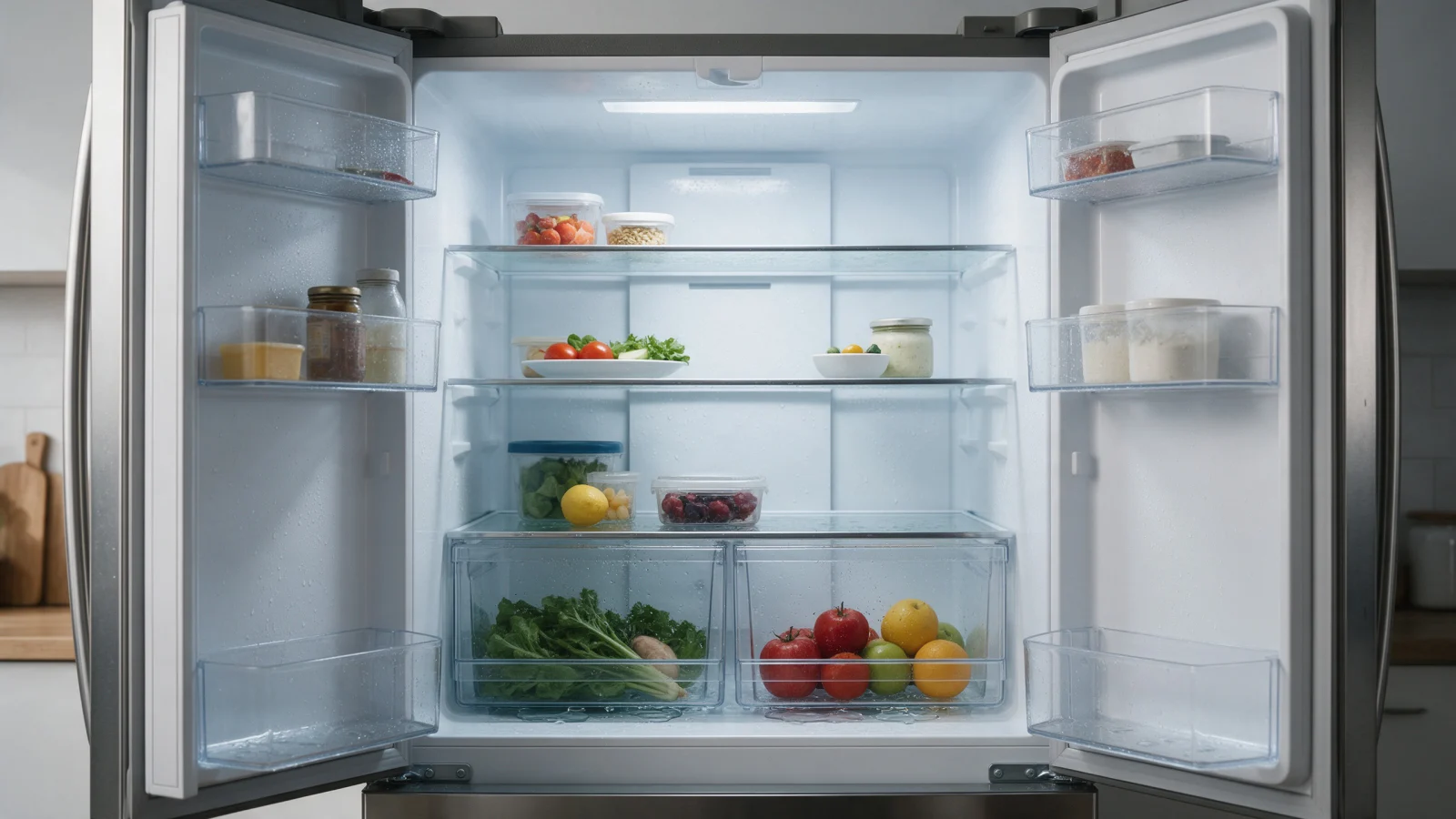
Water in the bottom of the fresh-food compartment, beneath the drawers, often means the drain at the back is partly blocked and meltwater is running out of its channel. A trickle or a sheet of ice on the back wall behind the shelves points to the same area. Droplets on the underside of a glass shelf or on the inside of the door suggest humid air, caused by warm food, a door left open or a crisper set to high humidity. A puddle that sits directly under the dispenser outlet or ice chute is a water-line or dispenser issue.
The RF178WRNX1 quick reference guide lists two full-width humidity-controlled drawers. A drawer with its vent closed holds moisture in with the produce, and wet leaves release a surprising amount of water that collects on the drawer floor and runs to the sides. Try opening the humidity vent a little and see whether the pooling shrinks.
The column RS3084SRHK1 is listed with two variable temperature zones and Fridge, Pantry and Chill modes. A zone running in a very cold mode with moist food inside can show more condensation. Match the mode to what you store, and wipe up the water so you can see whether it returns.
In a frost-free refrigerator, the freezer evaporator melts its frost at intervals and the water should run away through a drain to a pan. If the drain is clogged or frozen, the water has nowhere to go. It backs up and can seep into the cabinet. The numbered Fisher & Paykel list gives code 2 as two previous defrosts aborted after 30 minutes, and codes 7 and 8 as the evaporator sensor outside its normal range, above 45K ohms and below 660 ohms. Code 9 and code 10 are the same readings for the fresh-food (PC) sensor.
A sensor out of range changes how the defrost is timed and how cold the compartment runs. That can make condensation worse as well as leave meltwater behind. If a code has appeared, it tells the technician which sensor to measure first.
Fisher & Paykel models with ice and water, like the RF201ACUSX1 with its door water dispenser and internal ice maker, have a supply to inspect. If the water inside is clear, cold, and appears near the top or the ice area, a drip at the fill tube or valve is likely. Check the area under the ice maker for ice that has built up and then melted into the cabinet.
Water inside a cabinet can come and go, so a few notes help. Write down when you find it, what was loaded that day, which humidity or mode setting was active, and whether the freezer had just gone through a heavy ice-making spell. Photograph any ice on the back wall. If the problem appears only after a long weekend away or a power cut, say so, because thawed frost behaves differently from a recurring leak. A Fisher & Paykel owner who brings that timeline to the call usually saves a visit.
You can adjust vents, wipe up and test for the source. You cannot see inside the drain channel or measure sensors. A technician clears the drain on a Fisher & Paykel unit with the right method, tests the defrost heater and the sensors against the coded ranges, and checks the fill valve and tube. See refrigerator repair and freezer repair for what we handle. The refrigerator reference lists other symptoms on this brand.
When you contact us, give the model and serial from the rating label, where the water collects, whether you saw ice on the back wall first, any code displayed, and the date it began. If it happened after a power cut, a move, or a heavy grocery load, say so.
A little moisture from produce is common, especially with the humidity vent closed. A pool that returns after you wipe it is worth investigating.
Yes. A drain that cannot clear leaves ice, and the melt runs where it should not. Code 2 on the numbered list is the closest match.
Move anything that sits in the water and wipe the shelf so you can monitor it. If the compartment warms, take the usual care with perishable food.
Share a few details and we’ll confirm an appointment. Prefer to talk? Call us and we’ll help right away.