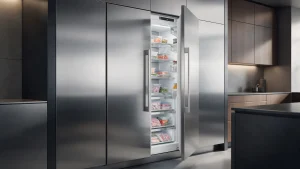
Most codes name one part. Code 11 names three at once: the low ambient heater, the PC (fresh food) fan and the FC (freezer) fan. The power module measures the current they draw, and for this code the total is lower than expected.
At a glance
| Code | 11 |
|---|---|
| Appliance | Freezers |
| What it means | Current measured for the ambient heater, PC fan and FC fan is lower than expected. |
Why the test sequence matters
The refrigerator runs a self-test whenever it is turned on at the power supply or a door closes while it is powered. The test takes 20 seconds, and opening a door interrupts it. The service manual gives an example of why that matters:
- If the fans and heater connector at the power module is unplugged and a door is opened as soon as the alarm sounds, the code shown will be 13, because the heater is tested first.
- If the doors stay shut until all tests finish, the code shown is 11.
So a technician is advised to wait the full 20 seconds before opening a door, to see the right code. If you are going to report a code, let the cycle finish before you look.
What the manual tells service to do
- Check the 6-way fan/LAH RAST connector at the power module.
- If that does not solve it, reterminate the connector.
- As the last step, replace the power module.
“LAH” is the low ambient heater. A single connector carries both fans and the heater, which is why one loose plug can raise the same code for all three.
While you wait for service
Silence the alarm with any control button, or unplug for a few seconds. Leave the connector alone. It sits at the power module.
Codes that overlap
- Code 12: the same three loads drawing too much current
- Code 13: the heater alone, low current
- Code 15: the PC fan alone, low current
Active Smart refrigerator service, San Francisco
Call (415) 941-6957 and tell us if the alarm began right after a power-up or door close.