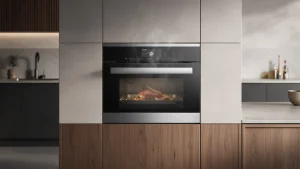
Combi-Steam Ovens
This reference helps organize useful information before combi-steam oven service.

Specialized Fisher & Paykel Appliance Repair in San Francisco
Mon–Sat: 8:00 AM – 7:00 PM
Combi-Steam Oven · in-home diagnosis
A combi-steam oven complaint is most useful when it is described as an operating condition rather than a guessed failed part. Record the complete model or product code, when the behavior begins, whether it is repeatable, and any message shown on the control panel before settings are cleared.
For combi-steam oven service, especially useful observations include mode, water status, descale message, temperature behavior, and any code. Those details help separate installation, supply, control, mechanical, airflow, water-flow, temperature, or heating paths that can produce similar symptoms.
These observations describe what the appliance is doing; they do not identify a replacement part by themselves. Fisher & Paykel product families span multiple generations, and the exact model determines which systems, sensors, and fault logic are present. In a combi-steam oven, depending on the model, water comes from a reservoir or a supply line and becomes steam in the cavity, so weak steam and a descale message can be related but are not the same observation.
Owner checks should remain external and reversible. Confirm normal user settings, visible obstructions, doors or drawers closing freely, accessible filters where the user guide permits cleaning, and household supply conditions that can be checked without disassembly.
Do not remove protected panels, probe live wiring, adjust gas components, bypass interlocks, open sealed refrigeration systems, or enter technician-only procedures. Preserving the original symptom and display information is usually more useful than repeatedly resetting the appliance.
Stop normal operation if there is smoke, a burning odor, visible arcing, repeated breaker trips, uncontrolled heating, active water reaching electrical parts, a gas odor, or severe mechanical movement. Address the immediate safety condition instead of trying to reproduce the fault.
Fisher & Paykel may use the same broad product name across several platforms. Controls, sensors, heating systems, pumps, fans, valves, communications, and error-code meanings can change by generation and market variant.
Use the model directory with the full identifier from the rating label. If the exact model is not listed, include the complete code with the service request rather than selecting a visually similar appliance.
Use the error-code library only when the code record matches the appliance family and model or platform context. Short labels can be reused on different Fisher & Paykel products, so the appliance identity belongs with the code.
A code is diagnostic evidence, not a parts order. If it returns after an owner-safe check, preserve the display and operating stage for the appointment.
A useful San Francisco service request includes both appliance evidence and access details. Mention tight kitchens, steep-entry stairs, building management requirements, or custom panels before the appointment.
Built-in appliances also depend on clearances, ventilation, drain routing, water supply, electrical connection, and cabinet alignment. A symptom that started after remodeling or moving the appliance is worth calling out explicitly. For a combi-steam oven, that includes the water supply or drain arrangement where the model uses one and the space around the cabinet opening.
No. It identifies a diagnostic direction. Exact-model testing and installation context are needed before a component is selected.
Record it first. A normal user-level reset may be appropriate for some models, but a recurring code is more useful when the exact message and operating stage are preserved. If a descale message returns after the routine in the manual, that detail belongs in the request.
Not as a default. Similar Fisher & Paykel appliances can use different controls, components, and service logic, so the complete model/product code should guide the repair path.
Mention stairs, elevators, garage or loading access, building-entry procedures, tight cabinetry, and anything that could affect safe access to the appliance.
Send the full model/product code, the symptom, any displayed message, and the relevant access details so the service request starts with useful evidence.
This reference helps organize useful information before combi-steam oven service.
A1 on a Fisher & Paykel wall oven means the oven overheated. Cooling down clears it.
A2 is a door lock error at the start of Self Clean on a Fisher & Paykel wall oven.
A3 means the door stayed locked after a Self Clean cycle finished on a Fisher & Paykel wall oven.
F101 on a Fisher & Paykel convection and microwave combi oven is listed as a power board fault.
Four combi oven codes that Fisher & Paykel lists as board communication errors.
Fifteen combi oven codes that Fisher & Paykel lists simply as board errors.
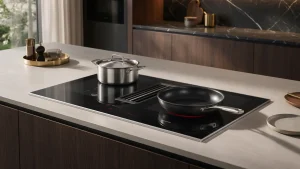
A cooktop complaint is most useful when it is described as an operating condition rather than a guessed failed part.
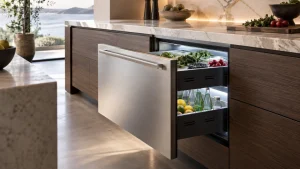
A CoolDrawer complaint is most useful when it is described as an operating condition rather than a guessed failed part.
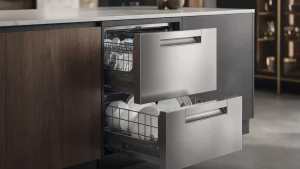
A DishDrawer dishwasher complaint is most useful when it is described as an operating condition rather than a guessed failed part.
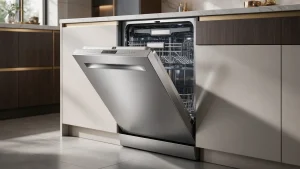
A dishwasher complaint is most useful when it is described as an operating condition rather than a guessed failed part.
Share a few details and we’ll confirm an appointment. Prefer to talk? Call us and we’ll help right away.