

Specialized Fisher & Paykel Appliance Repair in San Francisco
Mon–Sat: 8:00 AM – 7:00 PM
A Fisher & Paykel vacuum seal drawer that won't seal usually has a bag or seal-edge problem. Check the bag mouth and sealing strip first.
Written for Fisher & Paykel owners
A Fisher & Paykel vacuum seal drawer that will not seal the bag usually has a problem with how the bag sits in the drawer or with the sealing edge of the bag, and only less often with the pump or the heating element. Check the bag opening and the seal area first, then note exactly which stage of the cycle fails before you call.
A vacuum drawer does two jobs in sequence. First it pulls the air out of the bag, then it closes the bag with heat. Those two stages fail in different ways, and telling them apart is the most useful thing an owner can do. If the bag stays puffy and the drawer finishes the cycle without drawing it down, the vacuum stage did not do its work. If the bag collapses around the food but the end of it can be pulled open afterwards, the vacuum stage worked and the sealing stage did not.
Say which of these you see when you book your Fisher & Paykel visit. A technician hears “the bag draws down tight but the seal peels apart” and starts with the sealing strip. They hear “the bag never tightens” and start with the pump path and the drawer closure. The cycle level you chose also matters, so note whether you used one of the three vacuum levels or one of the three heat-sealing levels listed for the 30-inch Series 9 drawers.
Most failed seals begin with the bag, not the drawer. The open end of the bag has to lie flat across the sealing area with nothing folded into it. A fold in the bag mouth leaves a channel that air or liquid can pass through, and the seal bar closes over the channel instead of over a flat double layer of plastic.
Liquid is the next most common cause. Marinades, juices and fat that creep up toward the bag mouth during vacuuming leave a film inside the seal area, and heat cannot fuse plastic that is wet or greasy. Wipe the inside edge of the bag mouth dry before sealing, and consider freezing very wet food for a short time before bagging so less liquid travels upward.
Wipe the sealing strip and the surrounding drawer floor with a soft damp cloth when the drawer is cold and switched off, then dry them. Do not scrape the strip with a blade or a metal tool. Residue that has baked onto the sealing element is a reason to book a visit rather than to scrub harder.
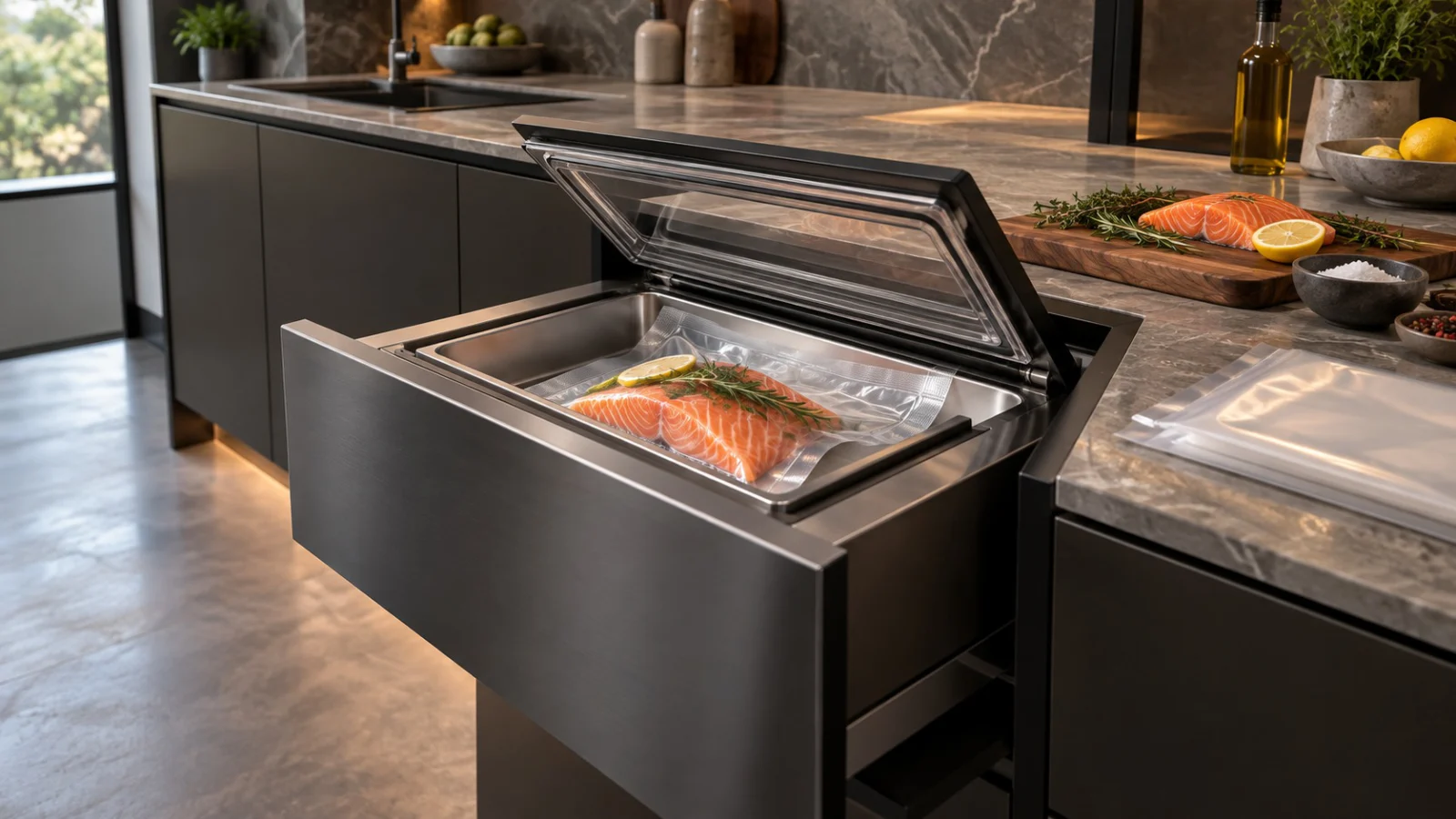
The drawer styles differ in ways that help narrow the question. The VB30SPEX3, a Series 9 Professional vacuum seal drawer, has soft-close action, touch controls and three vacuum levels, so if the drawer does not close gently into its latched position, that is worth noticing. The VB30SDB1-SET, a Series 9 Contemporary model, is listed at 29 15/16 inches wide with 0.3 cu ft of usable capacity, which is a reminder that the chamber is not large, and an oversized bag or a tray that touches the walls can stop the lid sitting down. The VB30SCX3 is a push-to-open drawer with touch controls and a glass base, so a push-to-open drawer that is left slightly ajar will behave very differently from one that has clicked fully shut.
None of that is a fault on a Fisher & Paykel drawer. It is simply a list of things to eliminate before suspecting an internal part. If you are not sure which of these models you own, the rating label and the model code on the front panel will say.
Re-bagging flat and dry will fix a large share of weak seals, and that is a good result. It cannot tell you whether the chamber lid gasket is still pressing evenly, whether the pump is pulling the same vacuum on every level, or whether the sealing element is heating along its whole length. A seal that works at one heat level but not another, or a seal that is good on the left and weak on the right, points to something a household cannot measure.
It also cannot prove that a drawer which seems fine is fine. A bag that holds for an hour and then goes slack has a small leak at the seal, and food in that bag is not protected the way you expect. Treat a doubtful seal as a failed seal for food that goes into the refrigerator or freezer, and do not rely on it for long storage until it has been looked at.
A Fisher & Paykel technician will watch a full cycle with a known-good bag, judge the vacuum draw on each level, inspect the lid closure and its seal, and check that the sealing bar heats and releases properly. They will also look for liquid or residue that has found its way into the chamber. For the visit, have the model and serial number from the rating label ready, along with which level you were using, whether the bag draws down at all, and when the problem began. Photos of a failed seal are helpful. Our vacuum seal drawer repair page covers how we work, and the vacuum seal drawer reference lists what we service.
That pattern means the vacuum stage worked and the seal stage did not. Moisture or a fold in the bag mouth is the usual reason. If a dry, flat bag still fails at the same heat level, the sealing element needs testing.
Check the manual for the bag type the drawer is designed for. A bag with the wrong surface or thickness can fail to evacuate or seal properly even when the drawer is working normally.
A seal that sometimes fails can let air back in. For perishable food, check each bag before storing it, and have the drawer looked at if failures keep happening.
Share a few details and we’ll confirm an appointment. Prefer to talk? Call us and we’ll help right away.