

Specialized Fisher & Paykel Appliance Repair in San Francisco
Mon–Sat: 8:00 AM – 7:00 PM
Fisher & Paykel washer smell usually comes from damp seals, dispenser residue or slow drainage. Here is how to tell which, what to clean and when to book a visit.
Written for Fisher & Paykel owners
A musty or sour smell from a Fisher & Paykel washer is usually a damp-residue problem: moisture trapped around the door seal, a detergent film in the dispenser area, or water that sits in the drain path between cycles. Dry out the seal and run a hot, empty cycle first, then look at how fully the machine drains.
Sniff the drum, the seal and the laundry separately. A sour, mildew smell on clean laundry that stays after drying points to the drum and seal. A smell that appears only when the cycle drains, or that reminds you of a drain, points to standing water below the drum. A chemical or perfumed smell that lingers means too much product is sitting in the dispenser or the tub. Burning or electrical smells are a different matter: stop the machine, unplug it and call us.
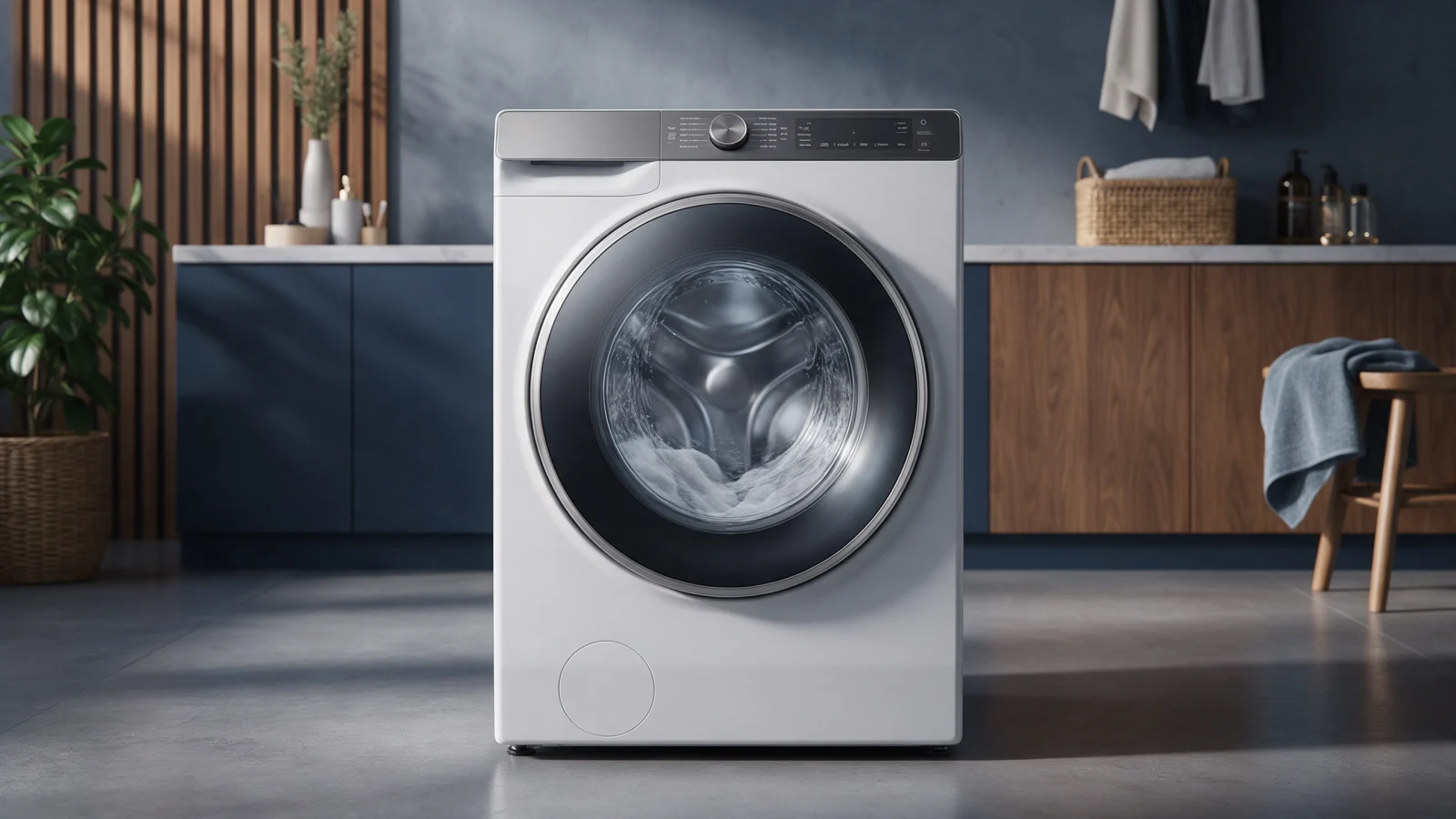
A Fisher & Paykel front loader such as the Series 11 WH1260H5, which the spec sheet lists at 12 kg with sensors that detect load size, soil level and colour, relies on a flexible door seal that holds water in its folds after every wash. Left shut, that water has nowhere to go. Wipe the folds with a dry cloth once the cycle ends, and leave the door ajar so air gets in.
On a Fisher & Paykel front loader the detergent drawer or reservoirs are the next place residue gathers. Pull the drawer as far as it goes, rinse it under the tap and clear any caked product. On the FlexiDose machines the reservoirs are meant to be refilled with fresh product, not topped up over old, so empty and wash them if they have sat for a while.
The Fisher & Paykel top loaders behave differently. A SmartDrive machine such as the GW601 has no door seal to trap water, but its lid and the area under the agitator can still hold a film. The GW601 model page on this site lists the facts we have for that range. Leave the lid up between washes and wipe the rim.
If the smell is strongest after a cycle and there is a little water in the tub or in the seal channel, the washer may not be draining completely. Possible reasons range from a partly blocked pump filter to a kinked drain hose or a drain standpipe that cannot take the flow.
Newer displays show E-prefixed codes, and this site covers the E3 family. On the older numbered Fisher & Paykel SmartDrive list, code 12 is given as a flood protection error, with water above flood level that could not be pumped down in 30 seconds. If your display ever showed 12, the machine has already seen a drainage problem, and a smell is no surprise. Code 10 is the temperature sensor error, given as an open circuit or ambient below -10 C, which can affect how hot a cleaning cycle runs.
| What you notice | Likely area | First step |
|---|---|---|
| Mildew on seal folds | Door seal | Dry it, leave the door ajar |
| Smell from the dispenser | Drawer or reservoirs | Remove, rinse, dry |
| Smell after draining, water left behind | Pump filter, hose, standpipe | Check hose route and filter access |
| Cleaning cycle never gets warm | Heating or temperature sensing | Note any code |
Do not mix cleaning chemicals in the Fisher & Paykel tub, and keep bleach away from any ammonia-based product. These steps cannot show whether the pump is working, whether the drain path inside the cabinet is clear, or whether a sensor is misreading the water level.
A technician looks at the drain pump and its filter path, the hose connections inside the cabinet and the fill and drain behaviour during a test cycle. They also read the stored fault history. If you book washer repair, we will need the model and serial from the rating label, any code the display showed, and whether the smell is in the drum, the seal, the drawer or the drain. A washer-dryer owner should say so, as the washer-dryer service covers a different drying path. Mention when you first noticed the odor and whether it comes back after a hot clean.
Water collects in the seal folds after every wash, and a closed door keeps it there. Add detergent film in the dispenser and the smell can build quickly, so dry the seal and leave the door open.
Not necessarily. A kinked hose or a partly blocked filter can leave water behind without any pump fault. A technician can test the pump if cleaning the filter and hose does not help.
Use only a cleaner your owner’s manual approves and follow its label. Do not mix products, and do not rely on bleach to fix a drainage problem.
Share a few details and we’ll confirm an appointment. Prefer to talk? Call us and we’ll help right away.